+86-13416307598 | +86 020 2262 6603 | inquiry@pearltransformer.com

English 
Views: 0 Author: Site Editor Publish Time: 2024-12-30 Origin: Site
A three-phase dry-type transformer is a specialized power distribution unit characterized by its non-oil construction, where the magnetic core and winding assemblies are entirely isolated without being submerged in insulating oil. Designed for safety and environmental protection, a three-phase dry-type transformer provides efficient voltage stepping and reliable electrical isolation, making it a preferred choice for indoor substations, commercial complexes, and industrial plants.
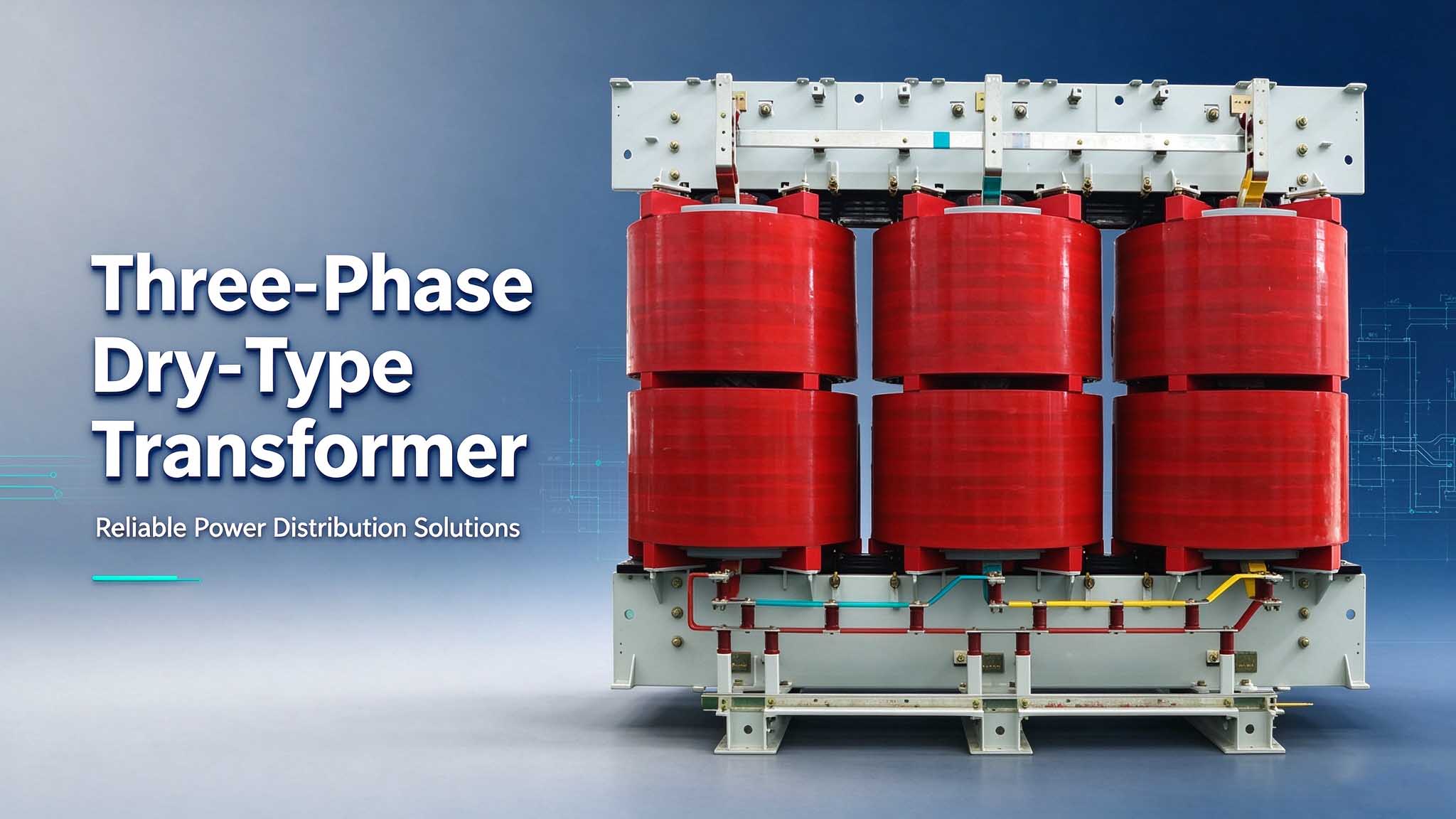
A three-phase dry-type transformer primarily utilizes two heat dissipation methods to maintain safe operating temperatures:
Natural Air Cooling (AN): Under normal rated capacities, thermal heat is naturally dissipated into surrounding air through convection. This allows continuous operation without requiring supplementary mechanical cooling equipment.
Forced Air Cooling (AF): When ambient or operational temperatures reach elevated levels (typically 80°C), temperature control sensors automatically initiate forced air cooling fans. This forced airflow significantly improves heat dissipation efficiency, enabling the three-phase dry-type transformer to sustain higher overload capacities or handle extremely high-temperature environments.
To ensure high dielectric strength without flammable liquid coolants, a three-phase dry-type transformer uses advanced epoxy resin formulations. Common manufacturing processes include:
Vacuum casting with epoxy quartz sand mixtures.
Vacuum differential casting reinforced with non-alkali glass fiber.
Non-alkali glass fiber winding impregnated with specialized resins.
 |  |
High Operational Safety: Containing no flammable transformer oil, a three-phase dry-type transformer drastically eliminates fire or explosion hazards. Its high dielectric insulation effectively prevents electrical leakage and short-circuit faults.
Eco-Friendly Performance: The complete absence of liquid coolants prevents toxic oil spills and environmental contamination.
Energy Efficiency: Engineered with low-loss silicon steel cores and optimized winding structures, a three-phase dry-type transformer lowers energy consumption and reduces operational costs. High
System Reliability: Built with durable epoxy materials and precise manufacturing processes, a three-phase dry-type transformer maintains a low failure rate and a long service life under normal conditions.
Moisture and Dust Sensitivity: Compared to liquid-filled units, a three-phase dry-type transformer has lower native protection against heavy dust or high humidity, often requiring protective enclosures or dedicated switchgear cabinets.
Indoor Application Focus: Outdoor deployment of a three-phase dry-type transformer requires specialized weatherproof enclosures and enhanced ventilation management to protect internal insulation.
Specialized Insulation Cost: Utilizing high-grade epoxy resins with superior thermal conductivity increases initial manufacturing overhead.
Winding Replacement Complexity: Localized coil repairs can be difficult if a winding suffers severe physical damage, often requiring a full coil module replacement.


