+86-18826241798 | +86 020 2262 6603 | inquiry@pearltransformer.com

English 
Views: 0 Author: Site Editor Publish Time: 2025-08-22 Origin: Site
Material | Conductivity (%IACS) | Density (g/cm³) | Tensile Strength (MPa) | Cost (USD/kg) | Key Advantages and Applications |
|---|---|---|---|---|---|
Electrolytic Copper | 100 | 8.96 | 220 | 9.2 | Best efficiency and reliability; low losses; lasts a long time |
Copper-Clad Aluminum (CCA) | 75–82 | 4.5 | 150 | 4.8 | Light; saves money; used in distribution transformers |
Aluminum | 61 | 2.70 | 90 | 2.5 | Costs less; light; good for homes and small businesses |
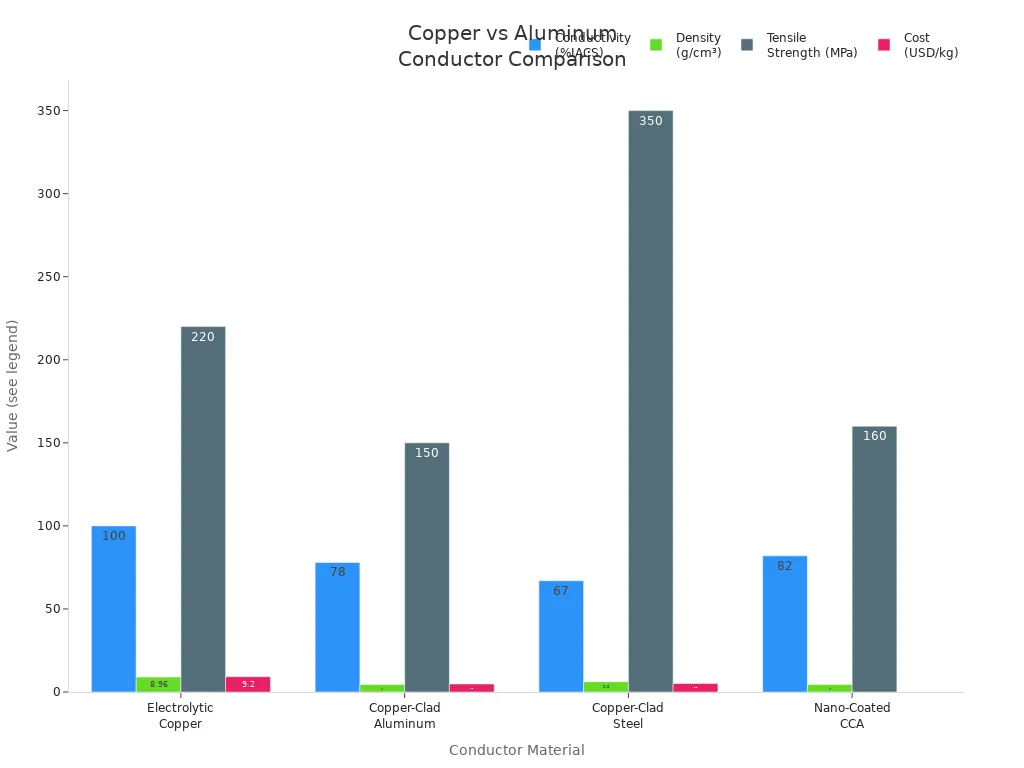
Copper conductors work better, are stronger, and last longer. They are best for tough jobs and high-power transformers.
Aluminum conductors weigh less and cost less money. They are good when weight and price matter most.
Copper transformers are smaller and last longer. They handle heat better and are tougher. Aluminum transformers are bigger and need more care.
You should pick copper or aluminum based on your needs. Think about how much power you need, how easy it is to install, and the effect on the environment.
Always use the right rules and connectors for safety. This is very important with aluminum conductors. It helps them work well for a long time.
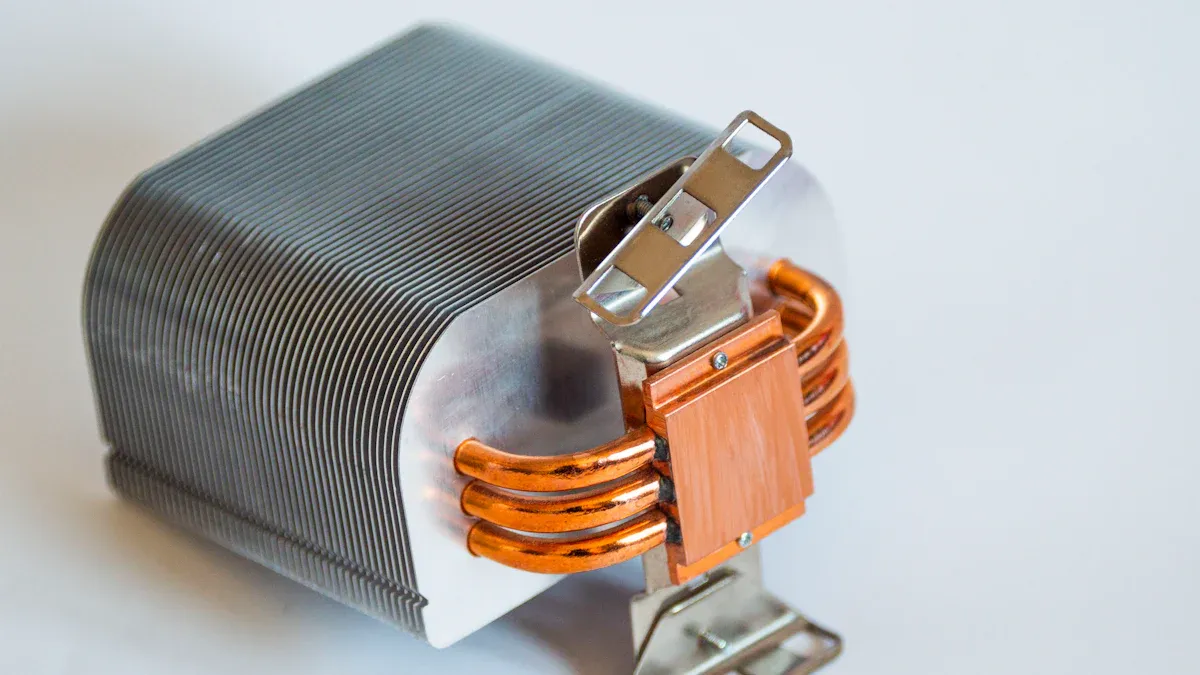
When you look at copper and aluminum conductors in pad mounted transformers, you see some big differences. Copper conductors let electricity flow better and are stronger. This makes copper transformers good for places that need to work well and last a long time. Aluminum conductors do not weigh as much and cost less money. Aluminum transformers are easier to move and put in because they are lighter. This is helpful for jobs where saving money and weight is important.
Here is a simple table that shows how copper and aluminum conductors are different in pad mounted transformers:
Property | Copper Conductor | Aluminum Conductor |
|---|---|---|
Physical Properties | Superior | Improved bending, creep, corrosion |
Mechanical Strength | Higher | Lower |
Load Capacity | Higher | Lower |
Voltage Drop | Lower | Higher |
Reliability | Higher | Lower |
Weight | Heavier | Lighter |
Price | Higher | Lower |
Installation | More challenging | Easier |
Copper transformers are best for places like data centers. These places need to be very reliable and move lots of electricity. Aluminum transformers are better for big renewable energy projects. They are also good when you need to save money or make things easy to carry.
You have to follow strict rules when picking conductors for transformers. Groups like IEC, IEEE, CSA, and ANSI make these rules for copper and aluminum conductors in pad mounted transformers. The rules talk about how strong and safe the conductors must be. They also say how to test them. For example:
CSA C227.4-06 says spade-type low-voltage terminals must be thick enough for the right amount of electricity.
Terminals need special plating to stop rust and must work with both copper and aluminum connectors.
High-voltage bushings must meet IEEE 386 rules.
Regular tests check if the transformer works well and is strong. A professional engineer must sign the test reports.
Certifications like UL, CE, and CSA show that copper and aluminum transformers are safe and good quality. You also need to check for things like efficiency, strong enclosures, and the right insulation. Local codes, like the NEC, only let you use certain aluminum alloys. They also say you must use special connectors for aluminum conductors. These rules help keep transformers safe, reliable, and working well.
Copper and aluminum conductors work differently in pad mounted transformers. Copper lets electricity move more easily than aluminum. It has about 61% better conductivity. This means copper loses less energy and works more efficiently. Copper winding is more reliable, especially in high voltage transformer winding and high voltage coil winding. Copper can carry more current in the same space. This helps transformers work better and handle more power.
Aluminum conductors do not conduct as well as copper. To work like copper, aluminum needs to be thicker. Manufacturers make aluminum winding bigger to meet standards. Aluminum winding transformers can still meet DOE rules. But copper winding transformers do better when there is a heavy load. If you need high efficiency transformers for tough jobs, copper is the best choice. Aluminum winding transformers are good for lighter loads and when saving money and weight is important.
Tip: For high voltage transformer winding or high voltage coil winding, copper conductors give the best results for conductivity and efficiency.
Getting rid of heat is important for transformers. Copper conductors move heat away from the core better than aluminum. This means copper winding keeps transformers cooler. It also helps transformers last longer. Copper winding rises in temperature more slowly and manages heat better.
Aluminum winding must be bigger to match copper’s heat control. This makes the transformer larger, but it helps spread out the heat. Aluminum has a higher specific heat, but it is not as dense and melts at a lower temperature. This makes it harder for aluminum to handle short overloads. If you use aluminum conductors, you need to watch heat and design carefully. Copper’s higher melting point and strength make it better for heavy loads and high heat.
Property | Copper Conductors | Aluminum Conductors |
|---|---|---|
Thermal Conductivity | Higher | Lower |
Temperature Rise | Slower | Faster |
Melting Point | Higher | Lower |
Overload Capacity | Better | Limited |
Heat Dissipation | More efficient | Requires larger windings |
Load capacity shows how much current a transformer can take. Copper winding can handle more current because it conducts better and is stronger. You can use copper conductors in high voltage transformer winding and high voltage coil winding for tough jobs. Copper winding transformers stay efficient and strong even with heavy use.
Aluminum conductors cannot carry as much current. To match copper, aluminum winding must be bigger. This makes the transformer heavier and larger, but it helps keep it efficient. Aluminum winding transformers are better for medium loads and when cost and weight matter most. Both copper and aluminum transformer winding can meet industry rules. But copper is still the best for high performance and reliability.
Transformers with copper winding and good insulation last longer. They do not overheat as easily. Copper conductors give you better durability and a longer life. Aluminum winding transformers save money and are lighter, but you must think about how they perform and last.
Note: For high efficiency transformers in tough jobs, copper winding gives the best performance, efficiency, and life. Aluminum winding is a good choice for projects that need to save money and only have medium loads.
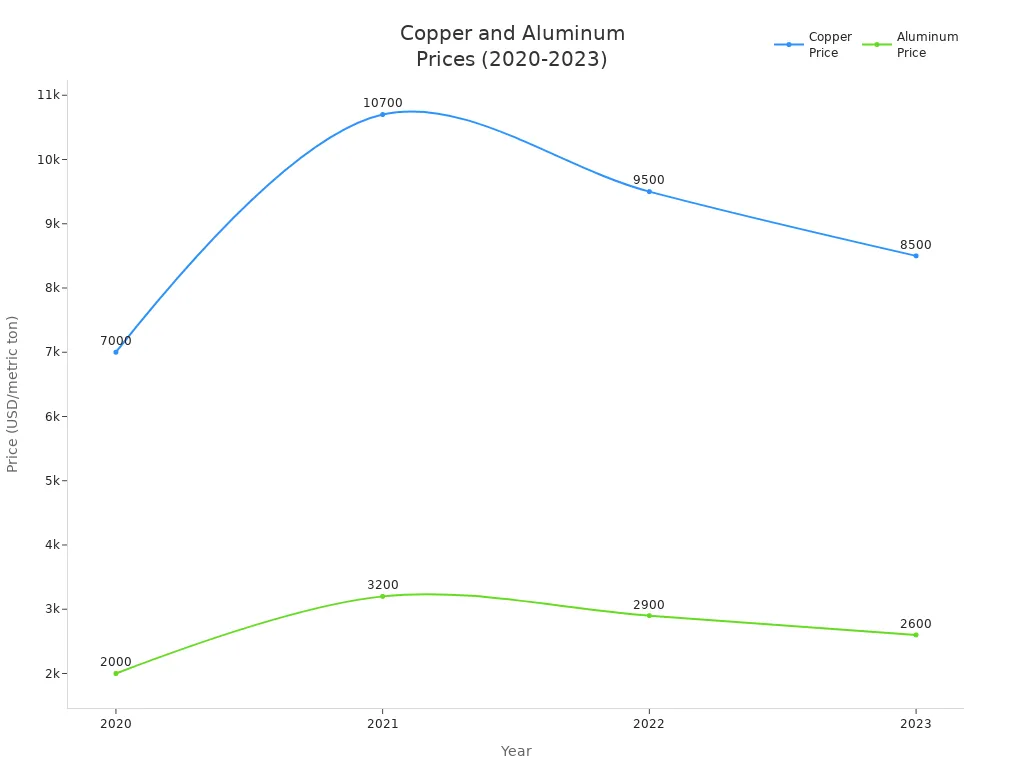
When you look at copper and aluminum, cost is important. Copper is much more expensive than aluminum. This big price gap changes how much transformers cost. The table below shows how prices changed in recent years:
Year | Copper Price (USD/metric ton) | Aluminum Price (USD/metric ton) |
|---|---|---|
2020 | About 7,000 | About 2,000 |
2021 | Went up to about 10,700 | Went up to about 3,200 |
2022 | Around 9,500 | Around 2,900 |
2023 | Stayed near 8,500 | Stayed near 2,600 |
Copper prices have stayed high because of supply problems and lots of buyers. Aluminum costs less, so many people pick it for transformer projects. Copper gives better performance but costs more. Aluminum is cheaper but does not conduct as well.
You need to think about more than just the price of the metal. Making and installing transformers also changes the total cost. Aluminum conductors are lighter, so they are easier to move and put in place. This can make labor cheaper and installation faster. Copper conductors are heavier and harder to bend. This makes them harder and more costly to install.
Manufacturers use new ways to make both copper and aluminum conductors better. For example, better insulation and rolling help copper transformers last longer. Improved enameling makes aluminum transformers safer and more dependable. These methods change the pros and cons for your project.
Market trends affect how you pick between copper and aluminum. Both metals got more expensive in 2021, then prices went down a little but stayed high. You can see these changes in the chart below:
Copper conductors are still used a lot in high-performance transformers. They work better and are more reliable. Aluminum conductors are getting more popular where saving money matters. They cost less and weigh less. Tariffs and supply chain problems have made both metals cost more. In Asia-Pacific, more people want transformers with aluminum conductors. In North America and Europe, rules about energy efficiency keep copper in demand. You should always look at the pros and cons before you choose a conductor for your transformer.
Copper and aluminum react differently to air and water in pad mounted transformers. Both make oxides when they touch air. Copper makes copper oxide, but electricity can still move through it. Aluminum makes aluminum oxide, which stops electricity at the connection. This means you must be careful when joining aluminum conductors.
Copper oxide lets electricity pass, so connections last longer.
Aluminum oxide can make bad connections. You need special coatings, like tin or silver, to protect aluminum joints.
In tough places, hydrogen sulfide can hurt copper and silver-coated copper. This causes rust and high resistance. Tin coating helps stop this problem.
Do not bolt bare aluminum and copper together. Use coatings and joint paste to keep connections strong for a long time.
Using the right coatings and joining methods helps both copper and aluminum last longer in pad mounted transformers.
Copper is stronger than aluminum. It has higher mechanical and tensile strength. This means you can use thinner windings that handle stress and shaking. Copper does not grow much when it gets hot, so connections stay tight. Transformers with copper are smaller and tougher.
Aluminum is not as strong. You need thicker windings or extra help to hold the same weight. This makes aluminum transformers bigger and heavier. Aluminum grows more when it gets hot, so connections can get loose and need more checks. Careful design helps aluminum last, but copper is better for hard jobs.
Property | Copper | Aluminum |
|---|---|---|
Tensile Strength | High | Moderate |
Expansion (Heat) | Low | Higher |
Winding Size | Thinner | Thicker |
Durability | Excellent | Good (with care) |
Copper transformers do not need much care. Their strong connections and rust resistance mean you check and tighten less. Copper stays steady under heat and stress, so it works well for a long time.
Aluminum transformers need more checks. You must look at connections for oxide and make sure coatings or pastes still work. You may need to clean and tighten them to stop problems. If you follow the right steps, both copper and aluminum can last a long time. But copper is easier to take care of.
Tip: Pick copper for important jobs or tough places if you want less work and more trust. Aluminum is good for saving money, but you must check it often and install it the right way.
Copper and aluminum conductors make transformers different sizes. Copper conducts electricity better than aluminum. You need less copper to carry the same current. This means copper transformers can be smaller. Smaller transformers fit better in tight spaces or old enclosures. Aluminum does not conduct as well as copper. You need more aluminum to do the same job. This makes aluminum transformers bigger. If you use high voltage transformer winding, copper keeps the transformer small and efficient.
Weight is important when picking a transformer. Copper is much denser than aluminum. Transformers with copper conductors are heavier. Aluminum weighs about 60% less than copper. This makes aluminum transformers easier to move and lift. You can see the differences in the table below:
Aspect | Copper Conductor Transformer | Aluminum Conductor Transformer |
|---|---|---|
Density | 8.96 g/cm³ | 2.7 g/cm³ |
Weight Difference | Heavier | Approximately 60% lighter than copper |
Mechanical Strength | High; withstands short-circuit impacts well | Lower; requires additional structural reinforcement |
Size | Smaller due to higher conductivity | Larger cross-sectional area needed |
Impact on Transport | Heavier, potentially more costly to transport | Lighter, easier and more cost-effective to transport |
Installation Impact | Smaller size aids installation in tight spaces | Lighter weight benefits installation in weight-sensitive applications (e.g., rooftops, offshore) |
If you need to put a transformer on a roof or somewhere weight matters, aluminum is a good choice. Lighter transformers also cost less to ship.
How easy it is to install depends on the conductor. Copper transformers are smaller but heavier. You might need special tools to move them. Their small size helps in tight spaces. Aluminum transformers are bigger but much lighter. You can often move them by hand or with simple tools. This is helpful for remote places or hard-to-reach sites. With high voltage coil winding, aluminum needs extra support. Aluminum is not as strong, so you may need to make the structure stronger to keep it safe.
Tip: Always pick a transformer size and weight that fits your site. Think about how you will move and secure it before you choose.
Copper transformers work well where you need reliable power. They are used in cities and suburbs for power distribution. Their design helps keep people and equipment safe. You can put these transformers close to buildings or underground. They do not need much space. Copper transformers are quiet. This makes them good for places where noise matters, like neighborhoods and offices.
Copper-wound transformers use copper conductors. This helps electricity move better. You lose less energy and get better results. You see copper transformers in many places:
Homes and neighborhoods
Shopping centers and business parks
Factories and warehouses
Utility stations and power networks
Pick copper-wound transformers if you want high efficiency. They are quiet and last a long time.
Aluminum transformers are lighter and cost less. They are used for many projects. Aluminum-wound transformers are common on roadsides in busy cities. You can use them in big industrial parks and factories. They are also good for temporary building sites. You can get power quickly and easily.
Aluminum-wound transformers are smart for new energy stations, like solar farms. Their light weight makes them easy to move and install. This helps when you need to set up or move equipment fast. Choose aluminum transformers to save money and install faster.
Here are some ways people use aluminum-wound transformers:
Roadside power for homes and businesses
Power for industrial parks and factories
Temporary power at building sites
Renewable energy projects like solar stations
Pick aluminum transformers if you want to save money. They are easy to move and install.
Some places need special transformers. Copper transformers are best where space is tight or you need very reliable power. They work well underground, near important buildings, or where power surges happen often.
Aluminum transformers are good where weight matters. They are easy to move. Use aluminum-wound transformers on rooftops, offshore platforms, or faraway sites. If you work with renewable energy or need temporary power, aluminum transformers are flexible.
Tip: Always choose a transformer that fits your site. Think about space, weight, noise, and how often you move it. Picking the right one keeps your power system safe and working well.
Picking copper or aluminum conductors affects the environment. Copper has better conductivity and is stronger. This lets you make smaller transformers. Smaller transformers use less steel, insulation, oil, and paint. You save materials and make less waste. They also need less energy to build and move. Copper does not rust easily, so transformers last longer. They do not need as many repairs. This helps the environment by lowering repairs and replacements over time.
Aluminum conductors need bigger transformers. Aluminum does not conduct as well as copper. You need more materials like steel and insulation. This uses up more resources. Aluminum can rust more, especially at the joints. You might see more problems and need more repairs. Over the whole life of the transformer, copper usually has a smaller impact on the environment.
Note: Using copper can help you use fewer materials and lower the environmental impact of your transformer project.
You can recycle both copper and aluminum transformers. There are some differences in how much they are worth and how you recycle them.
Both types go through the same recycling steps. You take out the transformer, check for PCBs, drain the oil, take it apart, cut up the coils, and recycle the tank.
Certified recyclers handle dangerous materials safely. This keeps workers and the environment safe.
Copper transformers give you more metal by weight. They are worth more money. Aluminum transformers are lighter and bring less money, but you should still recycle them.
Here is a quick comparison:
Aspect | Copper Conductors | Aluminum Conductors |
|---|---|---|
Metal Price (Oct 2024) | $9.40 per kilogram | $2.63 per kilogram |
Weight Yield from Coils | 150–350 pounds | 100–250 pounds |
Recycling Steps | Dismantling, oil draining, metal extraction | Same as copper |
Economic Value | Higher due to price and weight | Lower, but still valuable |
Environmental Compliance | Required | Required |
Recycling transformers helps the planet. You get back useful metals and keep dangerous stuff out of landfills. Copper transformers are worth more, but recycling both types helps keep the environment clean.
Copper transformers work best when you need high efficiency. They lose less energy and last a long time. People use copper transformers in factories and power plants. These places need strong and reliable performance. Aluminum transformers are good for short-term or low-cost projects. They are lighter and easier to put in place. Aluminum transformers are not as efficient as copper ones. Copper transformers have lower resistance and save more energy. Most important jobs use copper transformers because they work better. If you are not sure which to pick, ask a transformer expert for help.
Copper gives you better efficiency and reliability. It lets electricity move easily. Copper also handles heat well. This makes copper best for important or heavy jobs.
Yes, aluminum-wound transformers are safe to use. You need to install them the right way. Use approved connectors and check them often. This stops oxidation and keeps your transformer working well.
Aluminum costs less than copper most of the time. You save money on materials and shipping. But you might need bigger transformers and more care. Always look at all costs before you choose.
Do not mix copper and aluminum directly. This can cause corrosion where they meet. If you must join them, use approved connectors and joint paste. This keeps your transformer safe and working well.


