+86-13416307598 | +86 020 2262 6603 | inquiry@pearltransformer.com

English 
Views: 0 Author: Site Editor Publish Time: 2025-01-22 Origin: Site
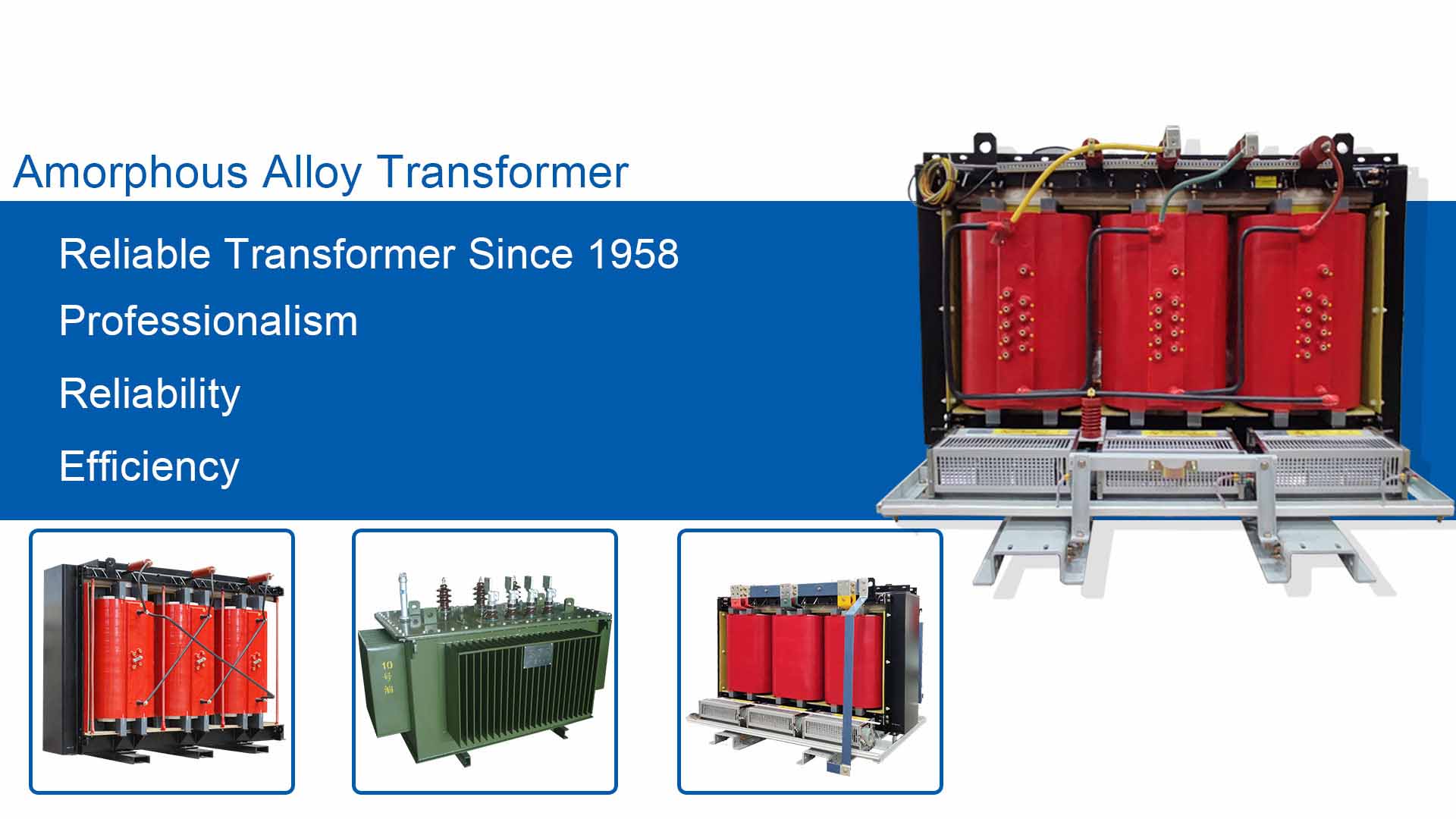
An amorphous alloy transformer, also known as an amorphous metal transformer, is a type of power transformer that uses amorphous metal alloy as the core material. Unlike traditional transformers that use crystalline silicon steel, amorphous alloys have a non-crystalline atomic structure. This unique structure provides several advantages, including lower core losses and higher efficiency, which is why the amorphous alloy transformer has become one of the most energy-saving choices in power distribution.
Amorphous alloy core: This is the heart of the amorphous alloy transformer. It is composed of thin, continuous ribbons of amorphous alloy material. The ribbons are wound into a toroidal or cylindrical shape to form the core.
Windings: Copper or aluminum windings are wrapped around the core. These windings carry the electrical current and induce a magnetic field in the core of the amorphous alloy transformer.
Insulation: Insulating materials are used to separate the windings from the core and to prevent electrical breakdown inside the amorphous alloy transformer.
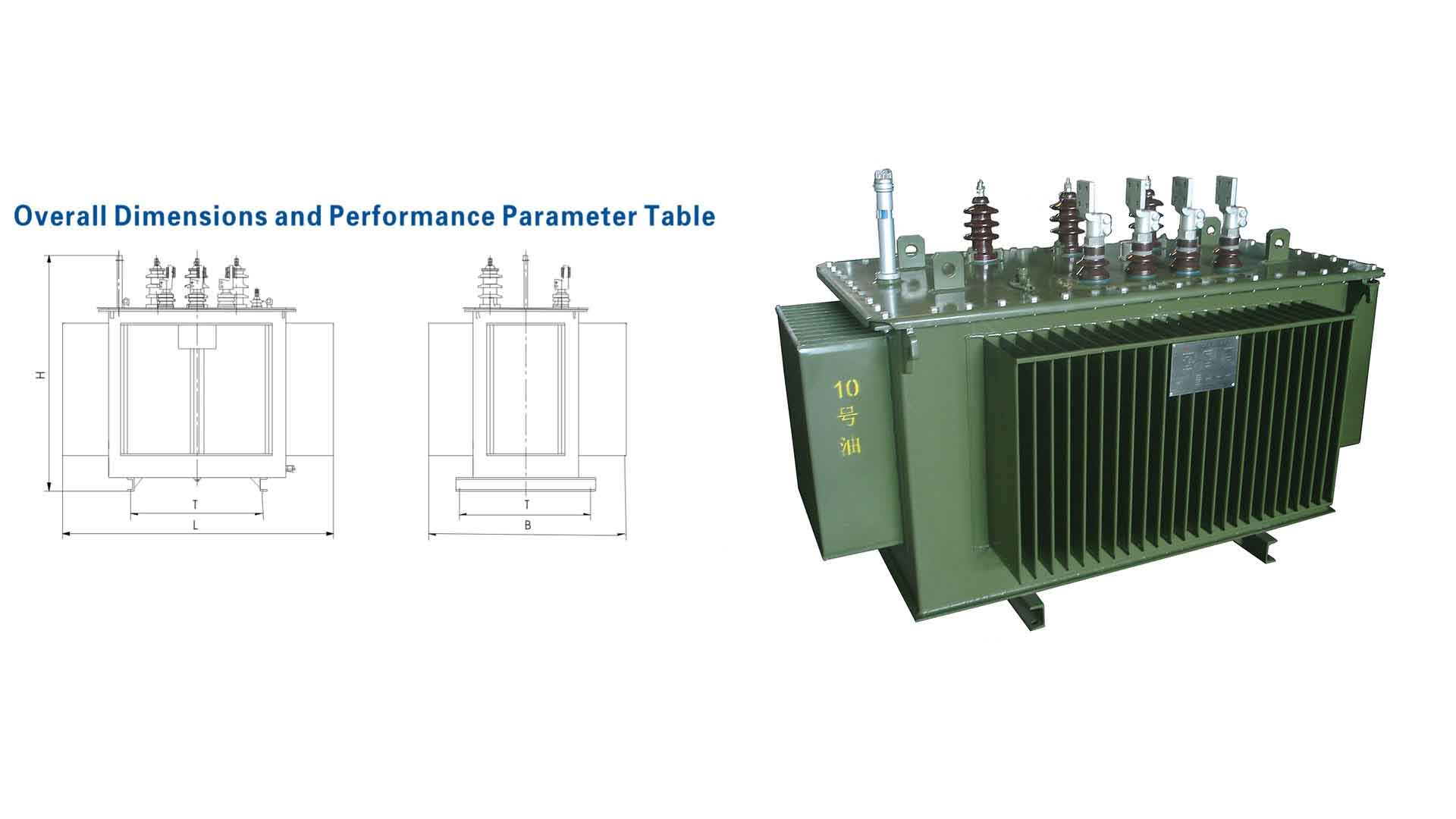
Tank: The entire amorphous alloy transformer assembly is enclosed in a tank filled with insulating oil. The oil provides both insulation and cooling.
The amorphous alloy core is the key component that gives an amorphous alloy transformer its high efficiency and low energy losses. Unlike traditional transformer cores made of crystalline silicon steel, amorphous alloy cores have a non-crystalline atomic structure, which delivers lower core losses and higher performance.
Amorphous alloys are typically composed of a combination of transition metals (such as iron, nickel, cobalt) and metalloids (like boron, silicon, phosphorus). The specific composition determines the properties of the amorphous alloy core. For instance, iron-based amorphous alloys are commonly used in an amorphous alloy transformer due to their excellent magnetic properties.
The atomic structure of an amorphous alloy is characterized by a random arrangement of atoms, as opposed to the highly ordered lattice structure found in crystalline materials. This disordered structure is often compared to the structure of a liquid, hence the term “metallic glass.”
Amorphous alloy cores are typically produced in the form of thin, continuous ribbons. These ribbons are then wound into a toroidal or cylindrical shape to form the core of the amorphous alloy transformer. The toroidal shape is commonly used to minimize leakage flux and improve the overall performance of the transformer.
Low core losses: The disordered atomic structure of amorphous alloys results in significantly lower hysteresis and eddy current losses compared to crystalline materials.
High permeability: Amorphous alloys exhibit high permeability, meaning they can be easily magnetized and demagnetized.
High saturation flux density: Amorphous alloys have a higher saturation flux density compared to silicon steel, allowing more compact amorphous alloy transformer designs.
Low magnetostriction: Low magnetostriction means the core does not change shape significantly when magnetized, reducing noise and vibration in the amorphous alloy transformer.
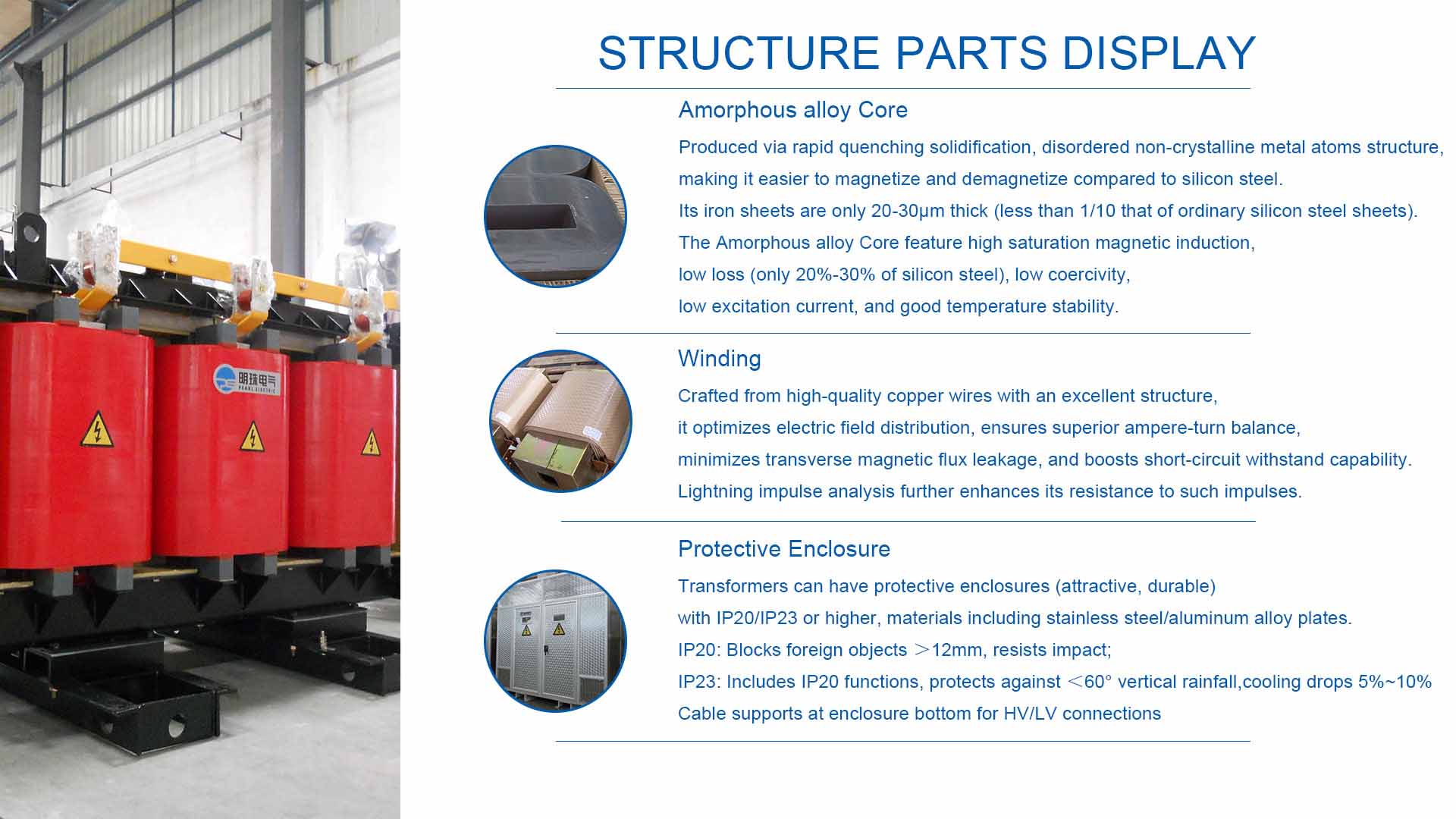
Amorphous alloys are produced through a rapid quenching process, where molten alloy is rapidly cooled to prevent the formation of crystalline structures. Common production techniques include:
Melt spinning: Molten alloy is ejected onto a rapidly rotating chilled copper wheel, forming thin ribbons.
Planar flow casting: Molten alloy is poured onto a rapidly moving chilled surface, producing sheets or plates.
Despite their advantages, amorphous alloys face certain challenges:
Limited thickness: Producing thick amorphous alloys without crystallization remains a challenge.
Cost: The specialized production processes can make amorphous alloys more expensive than traditional materials.
Ongoing research aims to address these challenges and expand the applications of amorphous alloys. For example, researchers are exploring new alloy compositions and processing techniques to produce thicker and more complex amorphous components.
While amorphous alloy transformers offer significant advantages, their production presents several challenges:
Production of amorphous alloy ribbons:
Rapid quenching: Amorphous alloys are produced by rapidly cooling molten metal, which requires precise control of cooling rates to prevent crystallization.
Continuous casting: The production of long, continuous ribbons of amorphous alloy is technically challenging.
Core winding: Amorphous alloy ribbons are very thin and brittle, making them difficult to handle and wind without damage.
Joint formation: The low permeability of amorphous alloys makes it difficult to create low-loss joints between the ends of the ribbons.
Cost: The specialized equipment and precise control required make amorphous alloy transformers more expensive than traditional silicon steel units.
Limited availability: The supply chain for amorphous alloy ribbons is less developed than that for silicon steel, limiting their availability.
Advanced production techniques: Continuous improvements in techniques such as melt spinning and planar flow casting have improved the quality and consistency of amorphous alloy ribbons.
Improved winding techniques: The development of specialized winding machines has helped reduce damage to the ribbons during the winding process.
Joint optimization: Researchers are exploring new materials and techniques to improve the performance of joints in amorphous alloy cores.
Amorphous alloy transformers offer significant energy savings and performance benefits. However, their production is more complex and costly than traditional transformers. Ongoing research and development are focused on making amorphous alloy transformers more widely available and affordable. Pearl Electric, a professional transformer manufacturer since 1958, offers energy-efficient amorphous alloy transformer solutions designed for lower no-load losses and long-term energy savings in distribution and industrial applications. Contact our team to learn how an amorphous alloy transformer can reduce your operating costs.


